
✦ Misconceptions & FAQs
Is Jihad Terrorism?
Recovering a Misunderstood Concept – A Misused Term
Few Islamic terms have been as misunderstood — or misused — as jihad. In public discourse, the word is often equated with violence or terrorism and sometimes even translated as “Holy War.” This translation is not only inaccurate; it has no basis in Islamic scripture.
The Arabic phrase harb muqadassa (“holy war”) does not appear anywhere in the Qur’an or any of the teachings of Prophet Muhammad (peace be upon him). The term “Holy War” originated in the medieval Crusader tradition, not Islam.
Its later association with jihad arose through historical misinterpretation and polemical misuse, contributed significantly to the distortion and hijacking of the term.
01
The True Meaning of Jihad
The Arabic word jihad means “striving” or “struggle.” Its primary meaning is the inner struggle to become a better human being — resisting wrongdoing, cultivating virtue, and aligning one’s life with moral principles.
Prophet Muhammad (peace be upon him) described this inner effort as the “greater jihad,” emphasising that personal reform, patience, and moral courage lie at the heart of faith.
This spiritual dimension shapes how Muslims approach character, worship, relationships, and social responsibility. Jihad is a lifelong commitment to growth, integrity, and service — not a call to violence.
02
The Outer Dimension — Bound by Ethics
Islam does recognise an outer form of jihad, but it is strictly regulated. Armed struggle is permitted only under specific conditions, such as selfdefence when a community is attacked or persecuted.
Even then, the Qur’an and the Prophet’s teachings impose clear ethical boundaries: civilians, women, children, the elderly, and those devoted to worship must never be harmed. Treachery, cruelty, and destruction of property are forbidden.
The Qur’an commands: “Fight those who fight you, but do not transgress the limits.” Transgression — excess, injustice, or indiscriminate harm — is prohibited.
03
How Extremists Hijack the Term
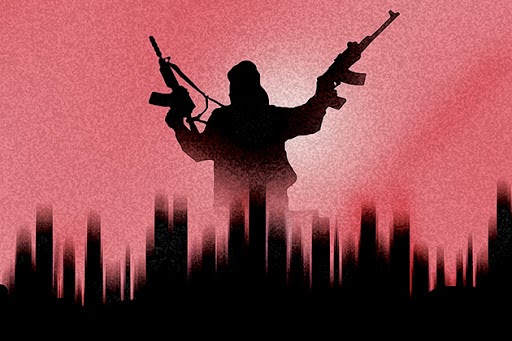
Violent extremist groups — responsible for severe harm and human rights violations — often misuse religious language to justify political violence. Their actions violate every ethical boundary set by Islam.
By stripping verses from context and ignoring the Qur’an’s emphasis on restraint, mercy, and justice, they turn a moral concept into a slogan for brutality. Their misuse of jihad does not represent Islam; it represents the abandonment of its principles.
The Middle Path — Wasatiyyah
To understand jihad correctly, one must return to Islam’s foundational ethic: wasatiyyah, the Qur’anic “middle path.” The Qur’an describes the Muslim community as “a justly balanced nation” (ummatan wasatan), emphasising moderation, fairness, and moral equilibrium.
Jihad, in its true sense, aligns with this middle path — striving for goodness, resisting injustice, and upholding ethical balance.
04
Recovering the Meaning
Jihad is not “holy war.” It is not terrorism. It is not indiscriminate violence.
To know jihad is to know a concept rooted in
selfimprovement
05
justice
06
protection of human dignity
— a concept hijacked by extremists, but preserved in the Qur’an’s call to balance, mercy, and moral clarity.