

✦ Islam- A Closer Look
Islamic Values
The Moral Foundations of a Just and Compassionate Way of Life
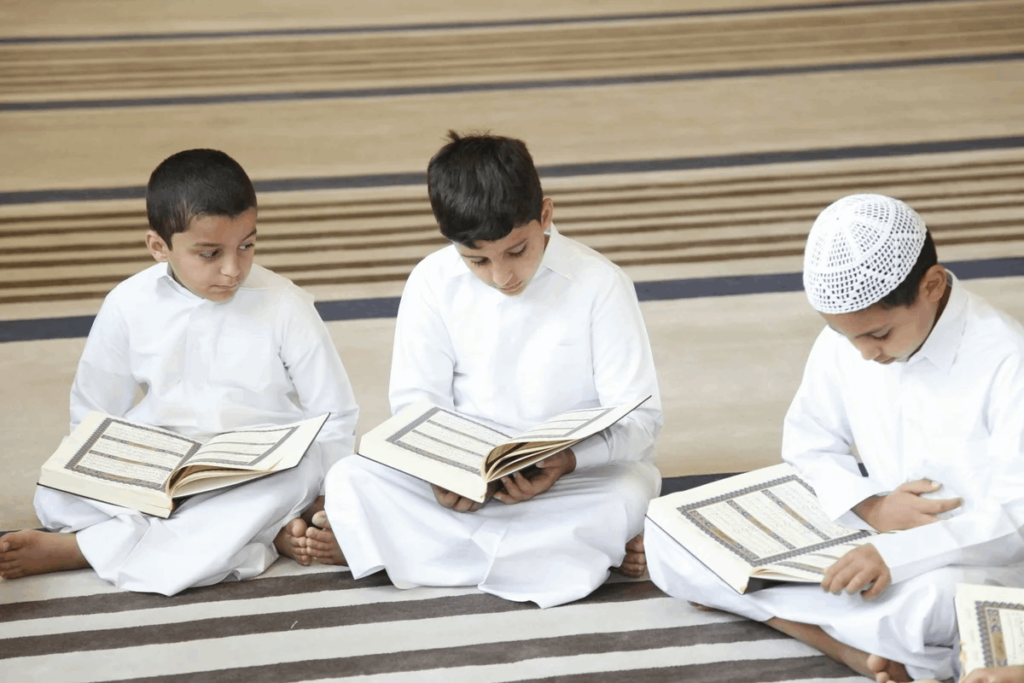
Islamic values form the ethical backbone of Muslim life — shaping personal character, social conduct, and public responsibility.
Rooted in the belief in one God and the awareness of ultimate accountability, these values encourage individuals and societies to act with fairness, compassion, and integrity. When lived sincerely, they create communities marked by justice, dignity, and peaceful coexistence.
01
Justice as a Moral Imperative
Justice is one of the most emphasised values in the Qur’an. Believers are commanded to uphold fairness even when it challenges personal interests, family ties, or social pressures. The Qur’an states:
“Do not let the hatred of others lead you away from justice… be just, for that is closer to Godconsciousness.” (Chapter 5, Verse 8)
This principle establishes justice not as a social convenience but as a spiritual duty. It applies universally — to friends and adversaries, to the powerful and the vulnerable.
A society grounded in this ethic cannot tolerate oppression, discrimination, or abuse of power.
02
Compassion and Mercy in Action
Compassion is at the heart of Islamic ethics. The Qur’an describes the “steep path” of moral excellence as feeding the hungry, supporting the distressed, and encouraging one another towards patience and mercy.
These values shaped the earliest Muslim communities, where social welfare, charity, and care for the vulnerable were seen as acts of worship.
Compassion was not limited to Muslims alone — it extended to all people under Muslim protection.
03
Protection of Minorities and Freedom of Belief
Islamic governance historically recognised the rights of religious minorities, granting them safety, autonomy, and freedom of worship. Prophet Muhammad’s (peace be upon him) Covenant of Medina affirmed that Jews living under Muslim rule were entitled to protection and fair treatment.
Centuries of historical testimony confirm this practice. Jewish and Christian communities in Muslim lands often enjoyed security, economic freedom, and selfgovernance. As historian Amnon Cohen notes, Jews in Ottoman Jerusalem lived with “religious and administrative autonomy” and contributed actively to society.
This protection was grounded in the Qur’anic principle: “There is no compulsion in religion.”
04
Responsibility, Restraint, and Moral Accountability
Islamic values emphasise personal responsibility — the idea that every action has consequences before God. This encourages selfrestraint, honesty, humility, and ethical conduct even when no one is watching.
The Prophet taught that harming a nonMuslim under Muslim protection is a grave violation, saying: “He who hurts a dhimmi hurts me.”
Such teachings cultivated societies where safety, dignity, and mutual respect were the norm.
05
Equality and Human Brotherhood
Islam rejects racial, ethnic, and tribal superiority. The Qur’an declares that humanity was created from a single pair, and that honour is based only on moral excellence.
This principle enabled remarkable interracial cooperation across the Islamic world.
As historian A.J. Toynbee observed, Islam achieved “the extinction of race consciousness” among its followers — a value urgently needed in the modern world.
06
Conclusion
Islamic values — justice, compassion, dignity, freedom, equality, and responsibility — form a timeless moral framework that has shaped some of history’s most diverse and harmonious societies.
When these values are lived sincerely, they nurture communities grounded in mercy and fairness, offering a model of coexistence that remains deeply relevant today.