
✦ Compassion
Mercy — as a way of life
A Moral Vision Rooted in Divine Compassion
Mercy is at the heart of the Islamic moral worldview. It is not an occasional act or a selective virtue; it is a way of life. The Qur’an opens with the names alRahmān and alRahīm — the Most Merciful, the Most Compassionate — reminding us that mercy is the first lens through which a believer understands God, the world, and their own conduct.
To live with mercy is to reflect something of the Divine attribute in human behaviour: gentleness, forgiveness, empathy, and care for all creation.
01
The Prophetic Model of Universal Mercy
Prophet Muhammad (peace be upon him) is described in the Qur’an as “a mercy to all the worlds” (Chapter 21, verse 107). This is not a poetic phrase; it is a moral identity.
His mercy extended to family and strangers, friends and opponents, humans and animals. He forgave those who wronged him, comforted those who grieved, and uplifted those who were marginalised.
His gentleness was not weakness; it was strength — the strength to respond to hostility with patience, to meet ignorance with understanding, and to treat every person with dignity.
02
Mercy in Human Relationships
Mercy transforms how people relate to one another. It encourages kindness in speech, patience in disagreement, and generosity in behaviour.
The Qur’an calls believers to “repel evil with what is better,” turning conflict into an opportunity for reconciliation. Mercy softens the heart, allowing a person to see beyond faults and frustrations. It nurtures forgiveness, reduces anger, and creates space for healing.
In social life, mercy becomes the foundation of coexistence: a commitment to treat others with respect even when differences arise.
03
Mercy Toward the Vulnerable
A society grounded in mercy protects those who are vulnerable. The Qur’an repeatedly emphasises care for the poor, the orphan, the widow, and the oppressed.
Mercy is not merely emotional; it is practical. It demands fairness, support, and advocacy. The Prophet (peace be upon him) taught that the strong are those who lift others, not those who overpower them. In this sense, mercy becomes a social ethic — a call to build communities where no one is left behind.
04
Mercy Beyond Humanity
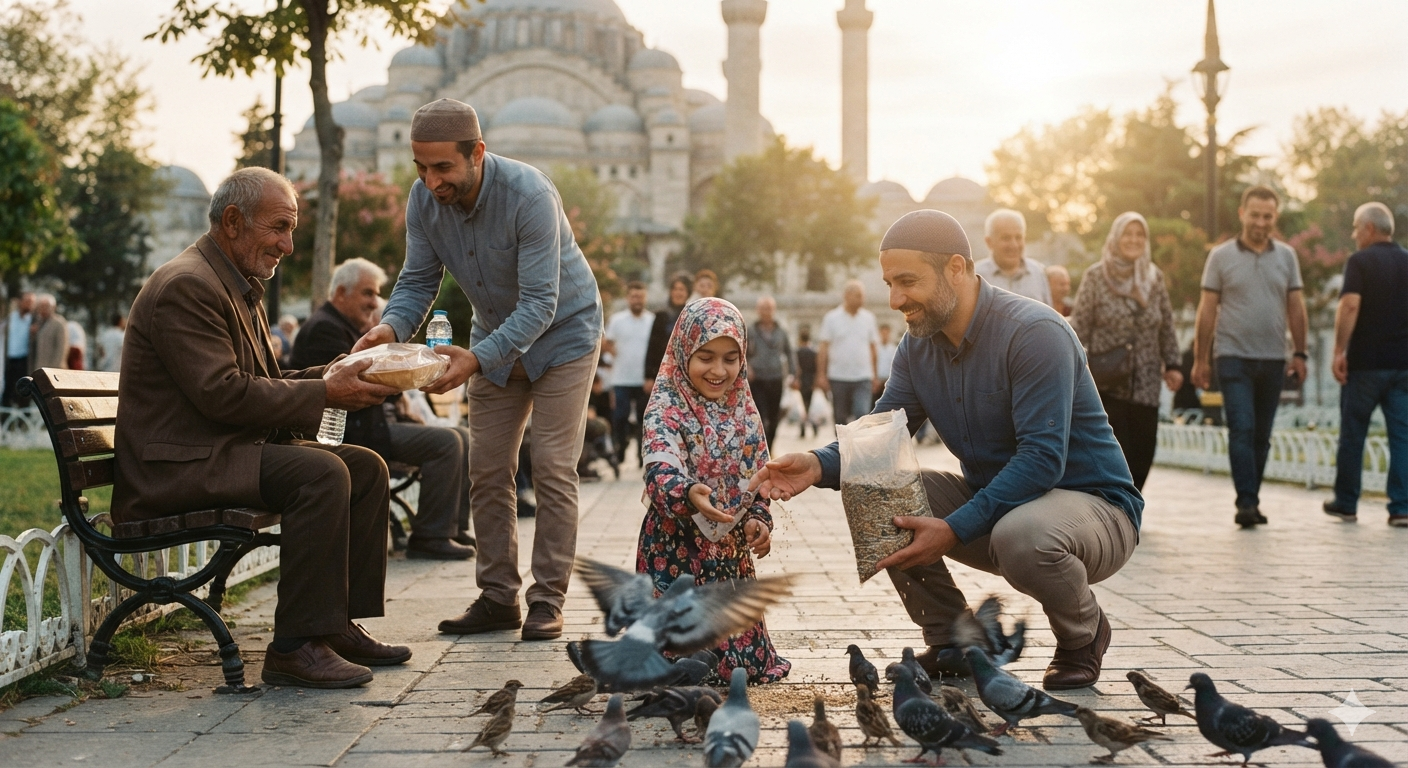
Islamic teachings extend mercy to all living creatures. The Prophet (peace be upon him) spoke of reward for kindness to animals and warned against cruelty.
He told stories of a woman forgiven for giving water to a thirsty dog, and of a man punished for neglecting a cat. These teachings remind us that mercy is not limited to human circles; it is a universal responsibility.
To live with mercy is to recognise the sanctity of life in all its forms.
05
A Way of Life That Elevates the Human Being
In a world often marked by harshness, competition, and impatience, mercy offers a different path. It invites a person to slow down, to see others with compassion, and to act with gentleness even when pressured by anger or frustration.
Mercy is not merely a virtue — it is a way of life that elevates the human being and reflects the beauty of Divine compassion.
Mercy enriches character, strengthens relationships, and brings calm to the heart.