
✦ Peace
Conflict Resolution in Islam
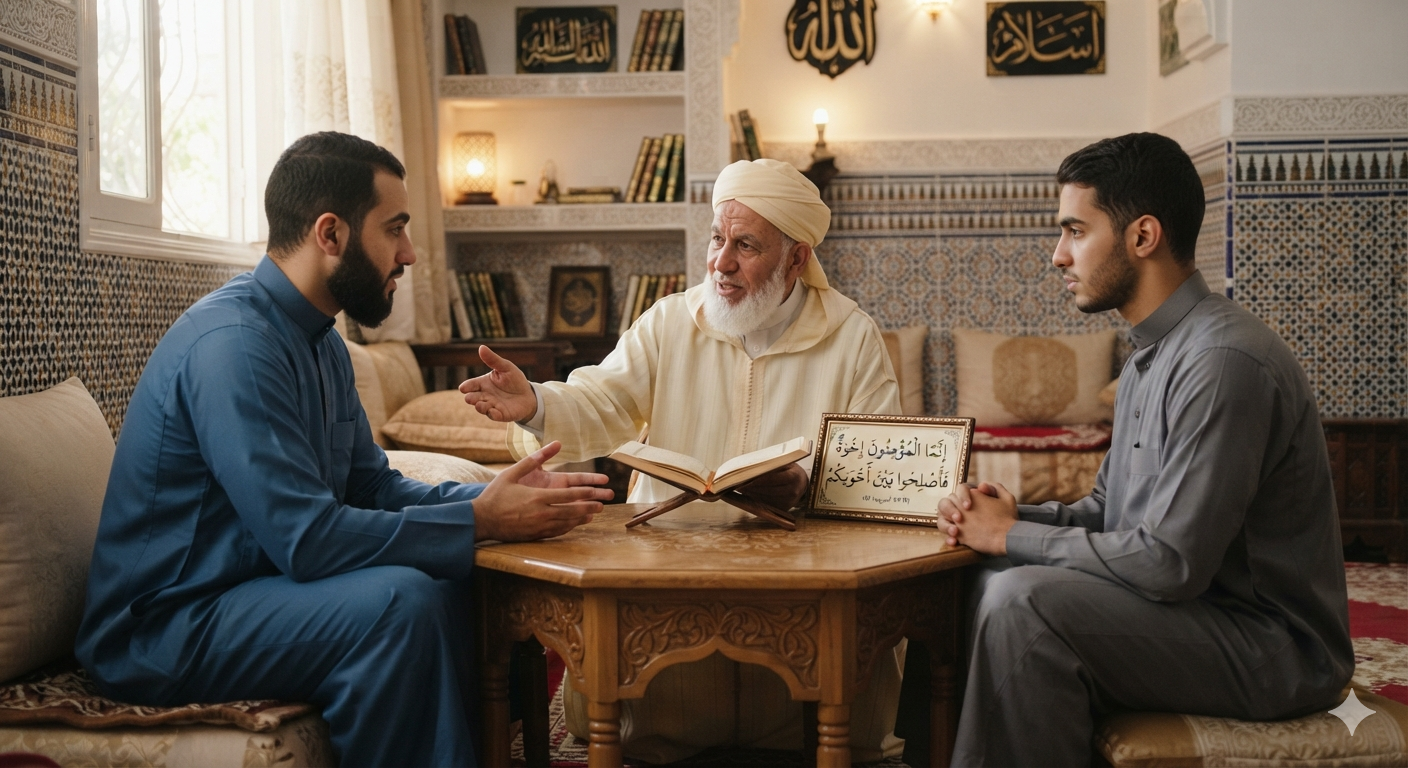
Restoring relationships with Principled restraint
Conflict is an unavoidable part of human life. Differences in personality, expectations, and circumstances can strain relationships, families, and communities.
Islam recognises this reality and offers a framework for resolving conflict that is rooted in dignity, fairness, and compassion. Rather than viewing conflict as a failure, Islamic ethics treat it as an opportunity to restore harmony, strengthen relationships, and uphold justice.
01
Reconciliation as a Moral Priority
At the heart of Islamic conflict resolution is the principle of reconciliation.
The Qur’an describes reconciliation as an act of goodness that brings people closer to God and closer to one another. It encourages individuals to step back from anger, listen with sincerity, and seek solutions that preserve dignity on all sides.
This approach is not about winning an argument; it is about restoring trust and preventing harm.
02
Principled Restraint and Emotional Discipline
A key element of this ethic is selfrestraint. Anger is a natural emotion, but when left unchecked it can cloud judgement and escalate tensions. Islamic teachings encourage individuals to pause, breathe, and respond with calmness.
This inner discipline creates the space needed for thoughtful dialogue. It also prevents words or actions that may later be regretted. In this sense, managing one’s emotions is the first step toward managing conflict.
03
Fairness as a Foundation for Resolution
Another foundational principle is fairness. Islam emphasises that justice must not be compromised, even when dealing with those we disagree with. This means avoiding assumptions, verifying information, and giving each person the chance to speak.
It also means acknowledging one’s own mistakes when necessary. Fairness builds credibility, and credibility opens the door to meaningful resolution.
04
Gentle Communication and Respectful Dialogue
Communication plays a central role in this process. Islamic ethics encourage speaking gently, listening attentively, and avoiding harsh or accusatory language.
The aim is not to defeat the other person but to understand their perspective. When communication is respectful, even difficult conversations become manageable. When communication breaks down, even small disagreements can grow into deep divisions.
05
The Role of Mediation and Trusted Support
In situations where direct dialogue becomes difficult, Islam encourages the use of mediators — trusted individuals who can help both sides express themselves clearly and work toward a balanced solution.
Mediation is not about taking sides; it is about guiding the conversation toward clarity, fairness, and mutual respect. This method has been used throughout Islamic history to resolve disputes within families, communities, and even between tribes.
06
Forgiveness as a Path to Healing
Forgiveness is another powerful tool in Islamic conflict resolution. Forgiveness does not mean ignoring wrongdoing or pretending that harm did not occur. Rather, it means choosing not to let resentment control the future. It allows relationships to heal and prevents cycles of retaliation.
Forgiveness is described as a strength, not a weakness, because it requires courage, humility, and a willingness to rise above one’s ego.
07
Harmony as the Ultimate Goal
Ultimately, the goal of conflict resolution in Islam is restored harmony. Harmony does not mean uniformity; people will always differ in opinions and preferences.
Harmony means living with those differences in a way that preserves dignity, strengthens relationships, and promotes peace. It means choosing dialogue over silence, fairness over pride, and reconciliation over division.
08
A Principled and Compassionate Path
In a world where disagreements often escalate quickly, the Islamic approach offers a path that is both principled and compassionate. It invites individuals to respond to conflict with wisdom, patience, and sincerity.
By doing so, they not only resolve disputes but also contribute to a more peaceful and understanding society.