
✦ The Scriptures
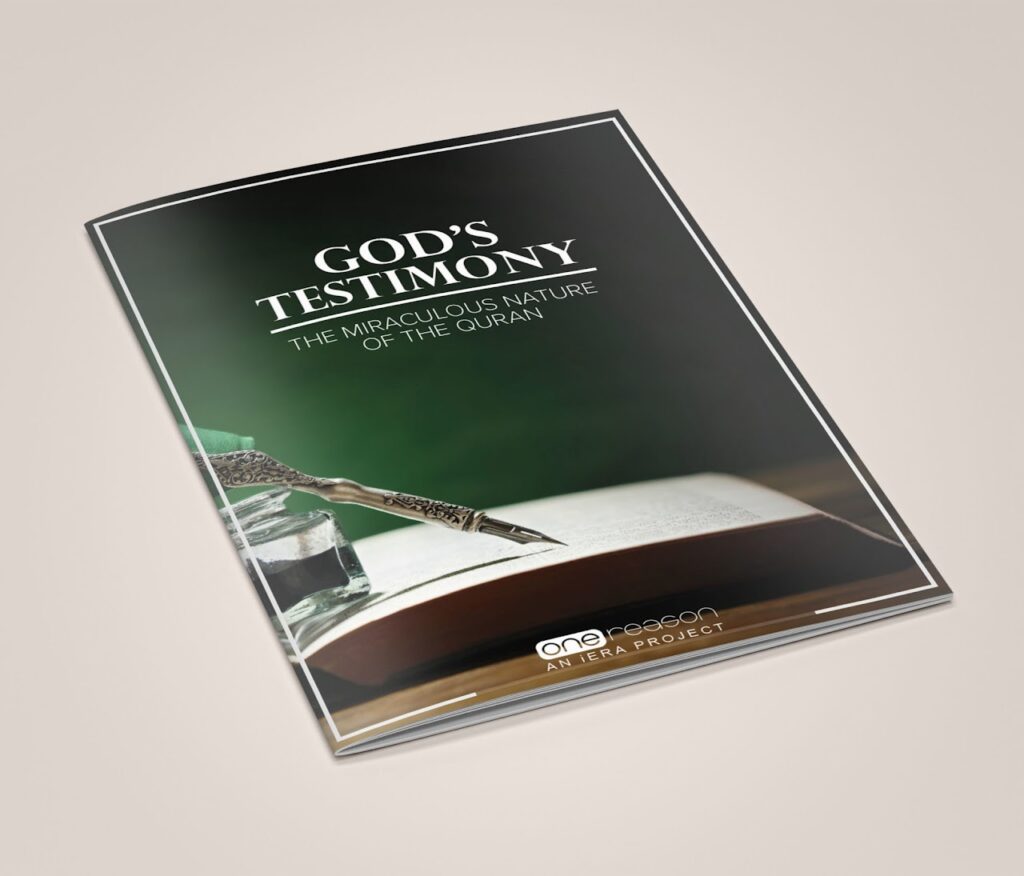
God's Testimony
Timeless guidance from a loving Creator
Imagine walking home after a long day and noticing a blind person trying to cross a busy road. No one sees him except you. Instinctively, you rush to help — not because you gain anything, but because compassion demands it.
In a similar way, human beings move through this transient life with a kind of blindness: we are thrown into existence without knowing why we are here, what we are meant to do, or where we are heading after death.
Divine guidance is the light that lifts this blindness. It answers the questions that trouble every human heart: Why am I here? What is my purpose? What lies beyond this life? God, being the source of all goodness and the Most Compassionate, would not leave humanity without direction. Revealing guidance is a natural expression of His perfect nature.
Just as every complex device comes with a manual — not to restrict the user, but to prevent harm — the Creator would not leave us without instructions for life. He created a universe finely tuned for our existence and provided everything we need physically: air, food, water, relationships. It follows naturally that He would also provide for our existential and spiritual needs: purpose, morality, and knowledge of Him.
With So Many Religions — Where Do We Begin?
The diversity of religions can be confusing. They cannot all be entirely true yet dismissing them all is equally unreasonable. While many belief systems are manmade or altered over time, it is illogical to conclude that God revealed nothing — especially when we have strong reasons to believe He would guide humanity.
The rational approach is simple: keep an open mind, examine the evidence, test the claims. Many may turn out to be false, but one may pass the test.
This booklet argues that the Qur’an meets objective, universal criteria for Divine revelation. Islam teaches that God has revealed guidance throughout history, and the Qur’an is simply the final link in that chain.
How Do We Test a Claim of Revelation?
Any book claiming to be from God must be examined using criteria that are rational, objective, and applicable to all scriptures — not based on emotion or personal preference.
01
A Clear, Coherent Concept of God
A Divine book cannot portray God as limited, physical, or dependent. The Qur’an’s definition of God is intuitive, rational, and uncompromisingly transcendent:
“Say, ‘He is God the One, God the Eternal. He begets none nor was He begotten. There is none comparable to Him.’”
Chapter 112, verses 1–4This chapter captures God’s Oneness, Eternality, and Absolute Independence — qualities reason itself points toward, for the Creator must transcend everything He created.
02
Internal and External Consistency
A book from God cannot contradict itself or established reality. The Qur’an invites scrutiny:
“Do they not consider the Qur’an with care? Had it been from other than God, they would surely have found much discrepancy.”
Chapter 4, verse 82Its language remains timeless, speaking meaningfully to both 7thcentury listeners and modern readers, engaging different audiences and levels of intellect across eras. This should make one reflect on who could have authored a book capable of addressing humanity across all times.
3. Signposts of a Divine Origin
The Qur’an’s depth of meaning, linguistic uniqueness, and transformative impact point beyond human authorship. Its authoritative voice compels the reader to acknowledge its Divine origin. Hearing it recited in Arabic has a profound, comforting effect — its beauty and rhythm move even those who do not understand the language.
Its verses offer layers of insight, inviting reflection and awakening humility and awe. Its unmatched literary challenge has stood for fourteen centuries, despite being issued to the greatest Arab linguists of its time — a challenge they could not meet.
The Qur’an makes a bold claim at the opening of its second chapter:
“Alif, Laam, Meem. This is the Book, without any doubt, a guidance for those conscious of God.”
Hypothetically, if every book on earth were lost — thrown into the sea, for instance — the only book that could be restored wordforword would be the Qur’an, and remarkably, it could be done simultaneously in every country within twentyfour hours.
03
A Final Invitation
The Qur’an describes itself as guidance for those who seek God and invites every sincere heart to reflect:
“Will they not contemplate the Qur’an? Or are there locks upon their hearts?” (Chapter 47 verse 24).
Ultimately, discovering whether a book is from God requires both reflection and a sincere call to the Creator Himself:
“When My servants ask you about Me — I am near. I respond to those who call upon Me.” (2:186)
Guidance is not a burden — it is a gift. A sign of Divine love. God’s promise in the Qur’an:
“Indeed, it is We who sent down the Qur’an, and indeed, We will be its guardian.” (15:9)
The Qur’an is, truly, God’s testimony to humanity.